The Resurgence of Andean Filigree
Before being a technique that PLIMAN chose to honor, filigree was, twice in the same century, a craft that Chordeleg was about to stop weaving.
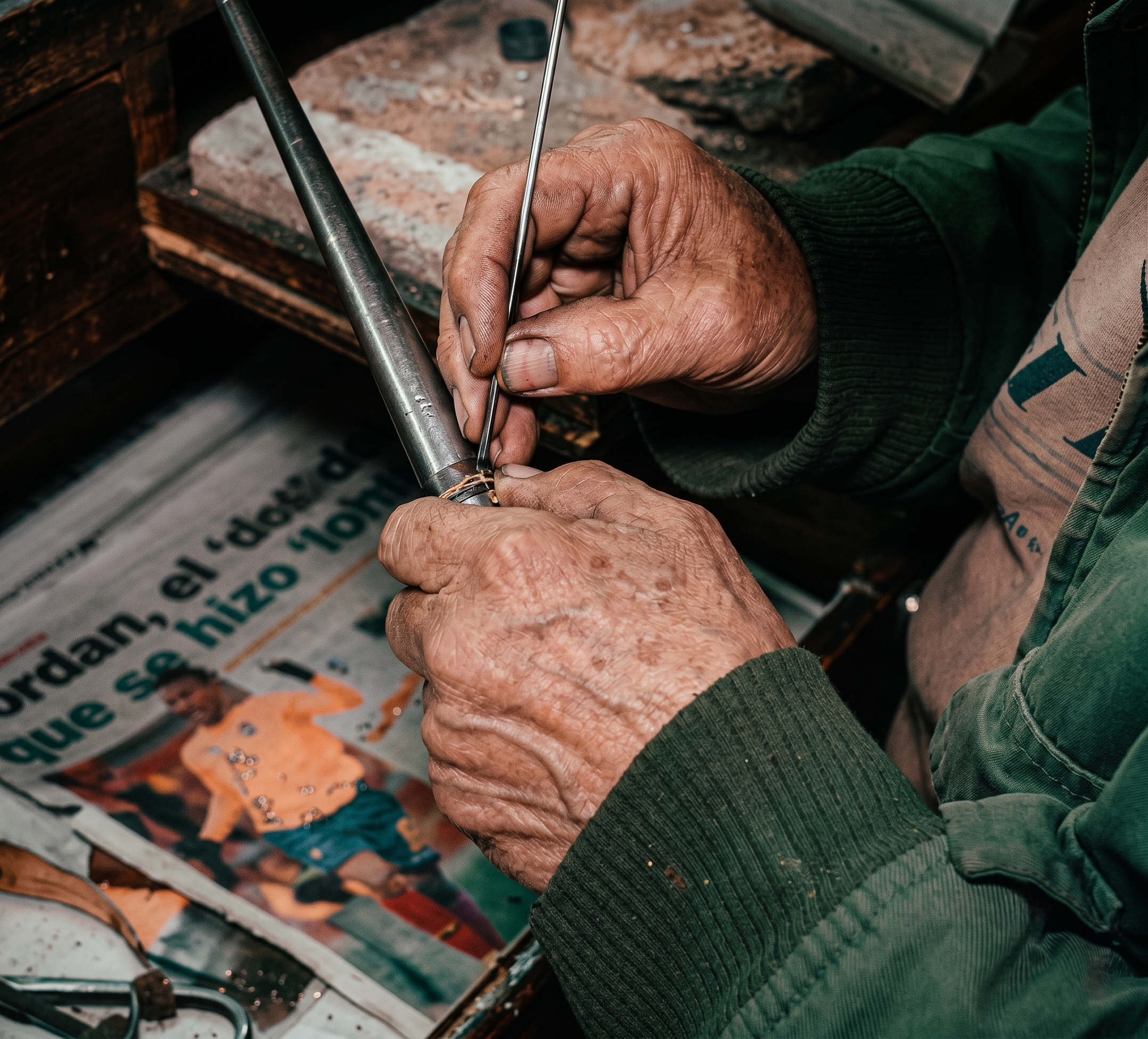
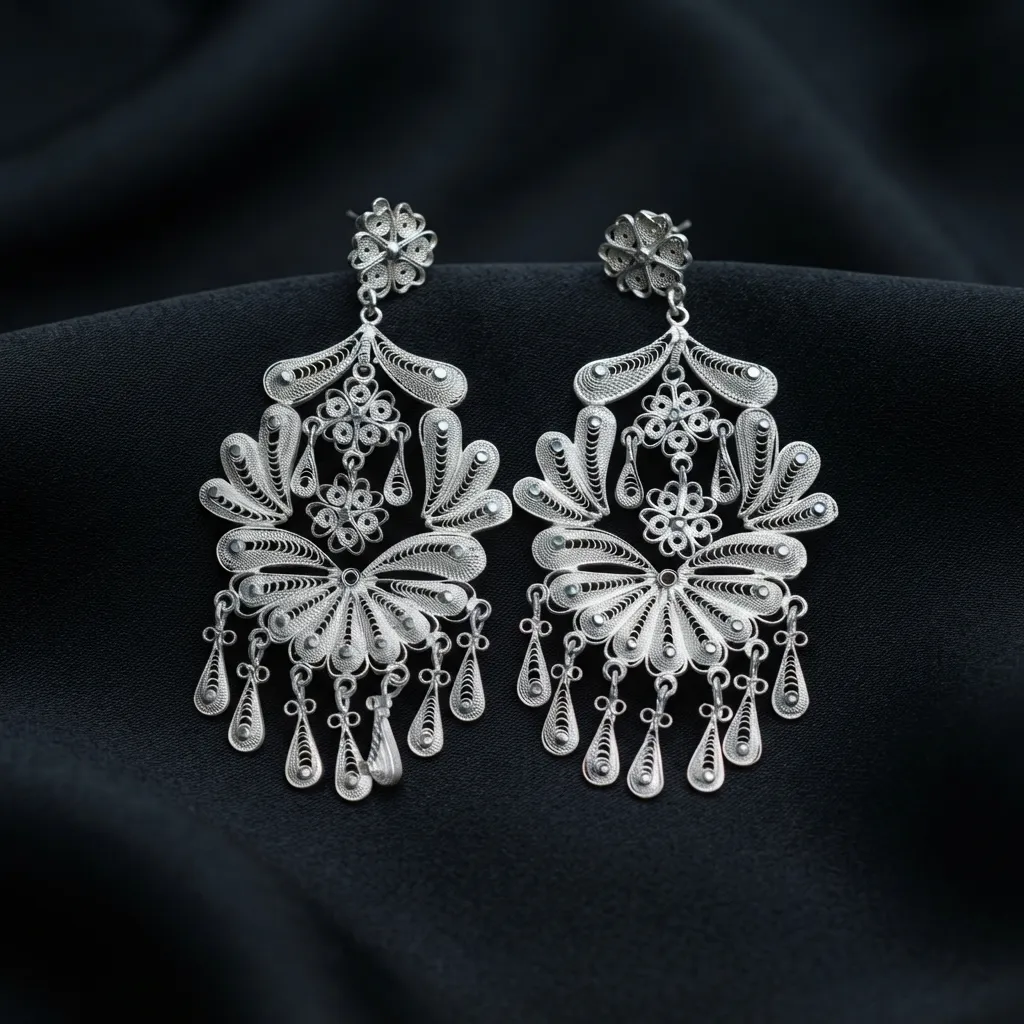
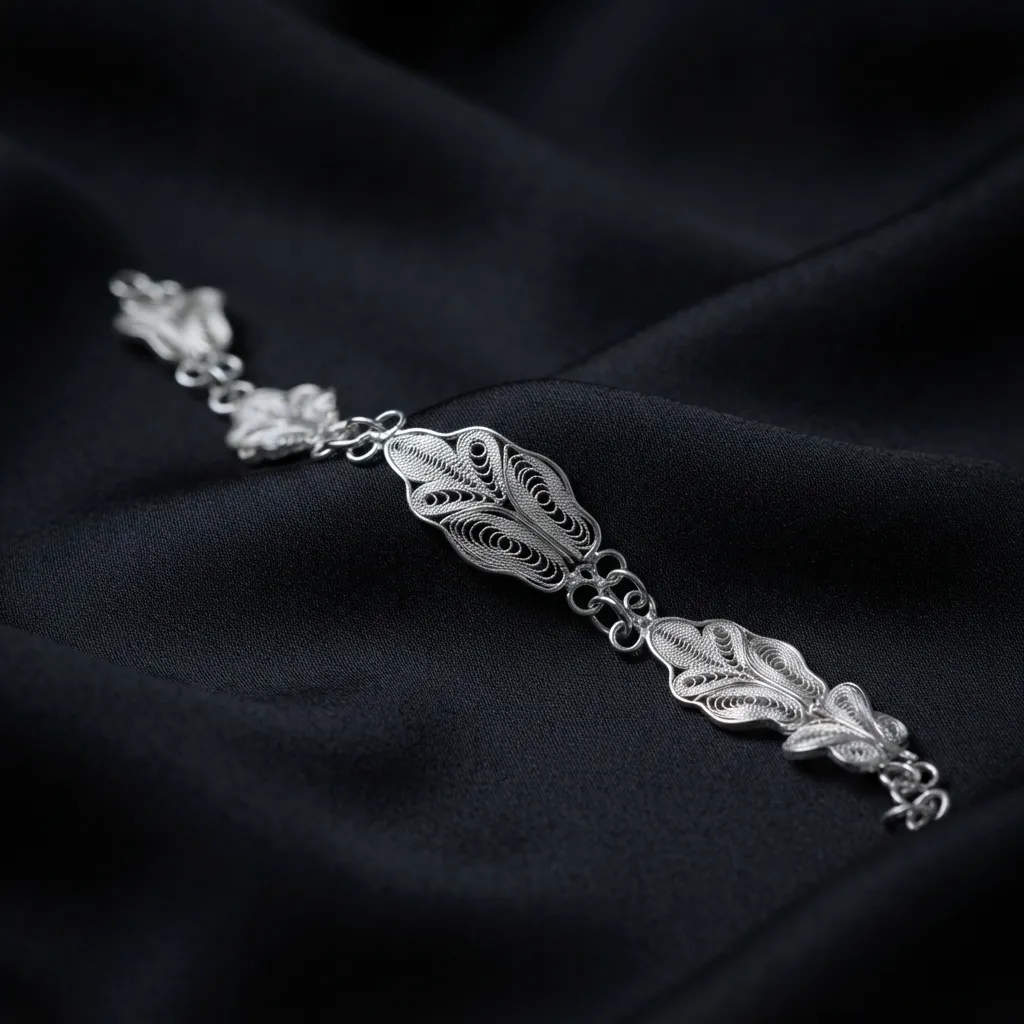
Filigree demands an almost ascetic patience. From the Latin filum (thread) and granum (grain), in its purest form is the art of weaving the void: you don't sculpt a solid block of metal, you stretch 950 silver or 18k gold until you get filaments barely thicker than a human hair, and then weave them into miniature architectural structures. What in other jewelry stores would be the filling between one stone and another, here is the protagonist.
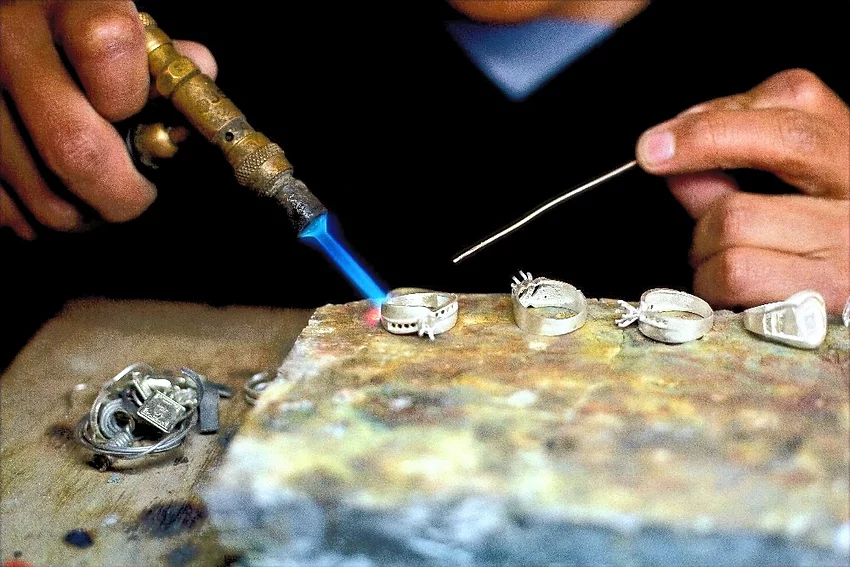
The process, reduced to the essentials, goes like this: the metal is melted into a bar, stretched through a row until it becomes thinner and thinner wire, this wire is twisted in pairs to form the "twist" – the basic unit of filigree – and finally bent, twisted and welded thread by thread until the motif is built. Without mold. No mechanical repetition. Piece by piece.
A trade that arrived in a land that already knew metals
Filigree was not born in the Andes. Its antecedents date back to the Middle East, around 2500 BC. It reached its greatest refinement in the Iberian Peninsula during Islamic rule. It was the Spanish silversmiths who brought it to the American viceroyalties during the Colony.
But it did not reach a virgin territory of metallurgy. The historian and archbishop of Quito Federico González Suárez, one of the first to systematically document the archaeological findings of the region, described pre-Columbian tombs with pieces of gold, silver and copper worked with smelting and embossing so precise that some studies of ancient metallurgy baptized them as "false filigree": they simulated woven thread, although in reality they were of a single metallic body. The technique that came with the Spaniards did not teach this land how to work with metal — it gave him a new vocabulary to say something he already knew how to say.
"The technique that came with the Spaniards didn't teach this land how to work with metal — it gave it a new vocabulary to say something it already knew how to say."
The century in which the thread was almost extinguished
According to the records of the Municipal GAD of Chordeleg, the first documented vestiges of goldsmithing in the canton date back to the second half of the eighteenth century. For generations, the craft was passed down from master to apprentice with no other file than the memory of the hands — which means that it could also be lost without any warning other than a workshop that one day stops opening its doors.
It was close to happening. Around 1980, an agreement between the Chordeleg Community Museum and SECAP hired two master filigreeers, Gilberto Espinoza and Gonzalo Muñoz, with a specific commission: to rescue the technique and teach it to a new generation before it was lost along with those who supported it. It was, in the most literal sense, a first resurgence — documented, by name and surname, not a tourist brochure legend.
The proof came just thirteen years later. In 1993, a natural disaster shook the Azuay region and hit its economy hard, including much of the urban artisanal activity that the 1980 bailout had barely reactivated. The trade, once again, had to decide whether to continue weaving.
The candongas that came out of Chordeleg
He decided yes. In 2004, ninety-two candidates for Miss Universe visited Cuenca wearing candongas – the most representative filigree earrings of the canton – and that exhibition, more than any advertising campaign, made the piece fashionable inside and outside Ecuador. The lawsuit that followed allowed a new generation of artisans to be trained around a trade that thirteen years earlier seemed doomed to the local history books.
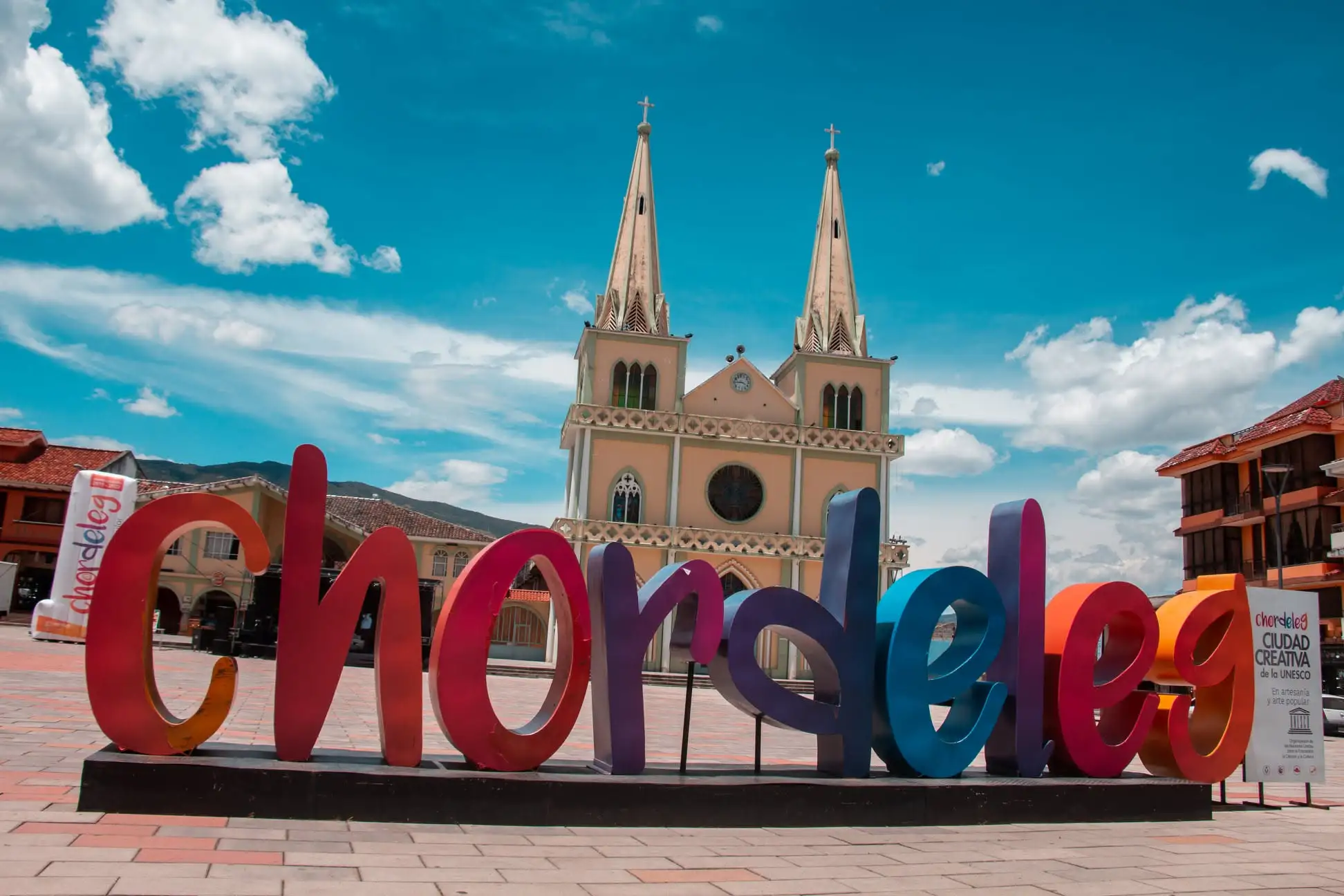
Institutional recognition came later, and came to confirm what Chordeleg already knew about himself. In 2017, the canton joined the UNESCO Creative Cities Network, in the category of crafts and folk art; That same year the Cabildo itself registered more than two hundred artisan workshops and around 206 jewellery shops, with six out of ten economically active people in the canton depending on goldsmithing and filigree. In December 2020, Chordeleg was declared "Magical Town of Ecuador", with the filigree recognized, in the words of the Municipality itself, as "the unique exceptional attraction of the country". Today, more than one hundred and fifty jewelry stores are deployed in the center of the canton, and candongas and bell towers several meters high decorate, like sculptures, the two main access roads to the city.
The resurgence that touches us
Here it is worth correcting something that we have said before in an imprecise way: PLIMAN is not a workshop. Chordeleg already has more than two hundred, and he doesn't need another competing for the same workbench. PLIMAN is a brand that exists so that those who truly know how to forge receive, for their work, the price that work deserves.
In practice, that means that every piece we accept is assigned to the independent master whose specialty fits exactly the technique that piece demands—filigree, setting, or forging—rather than forcing a single generalist to do it all. Quality, for us, is not an abstract promise: it is the direct consequence of matching the problem well with the right person. And when the assigned master is precisely the one who best masters that technique, PLIMAN pays for that specialty — not for a generic fee for "artisanal labor," that diffuse category that in so many jewelry stores ends up absorbing the margin that should go to those who really held the metal. Gold, given its cost and the technical demand involved in working it in filigree, is offered exclusively on request: we do not have it waiting for a buyer in a display case, we forge it when someone requests it, with the correct master already assigned to that piece.
Before that master touches the metal, we calculate with parametric design the exact tension and flow of the threads — but the calculation ends where the anvil begins. The casting, rolling and drawing of the wire remain a strictly analogue rite: a goldsmith from Chordeleg knows, by muscle memory, how many turns a pair of silver threads can withstand before breaking, and he recognizes the exact annealing temperature only by the color that the metal adopts under the flame. No machine—and certainly no 3D printer—has yet learned how to do that.
That is, for us, the real resurgence: not only that the technique survives, but that those who carry it in their hands receive, each time, the recognition – and the price – that a trade that was almost lost twice in the same century has more than earned.