How to Care for Your Filigree Jewel in 925 and 950 Silver
The master who forged your piece spent weeks on each thread. This is what it takes on your piece to make that work last for generations.
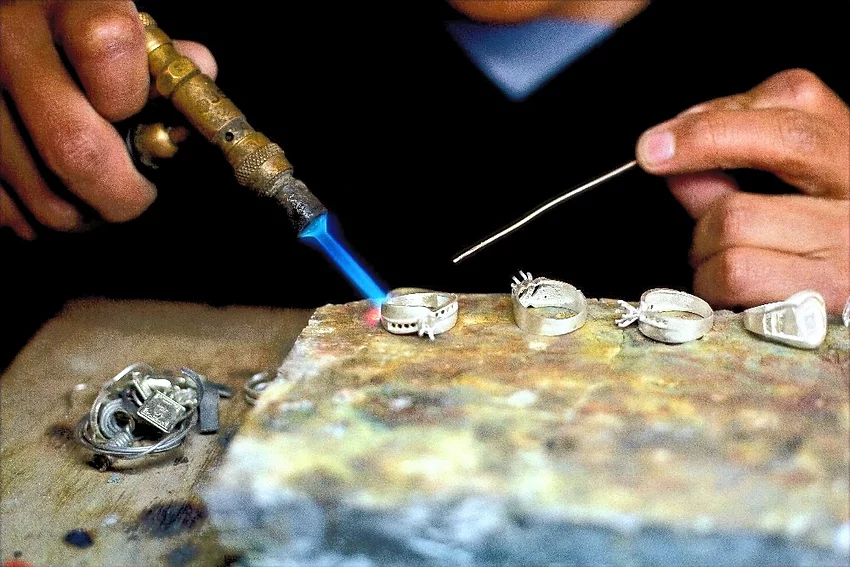
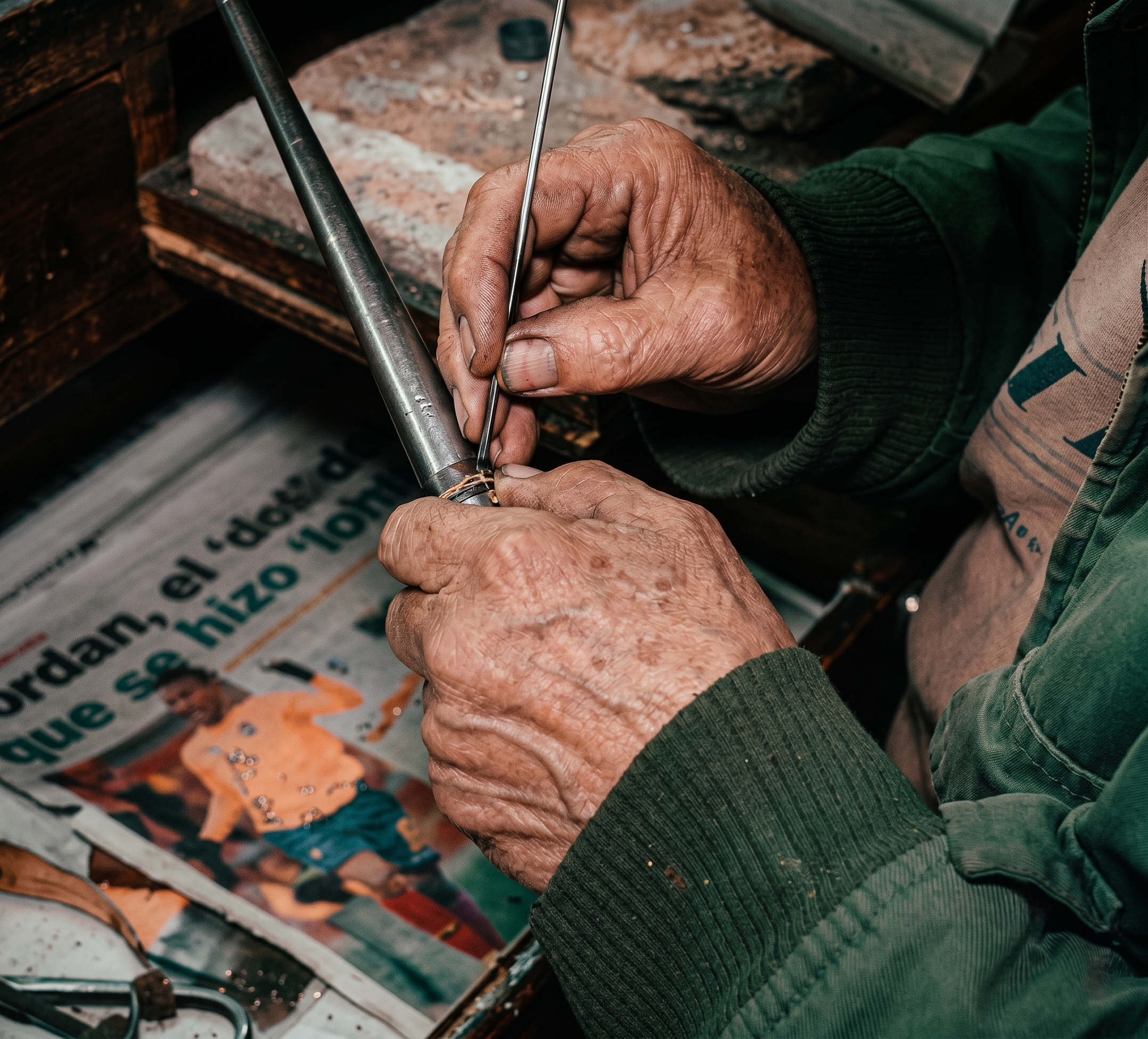
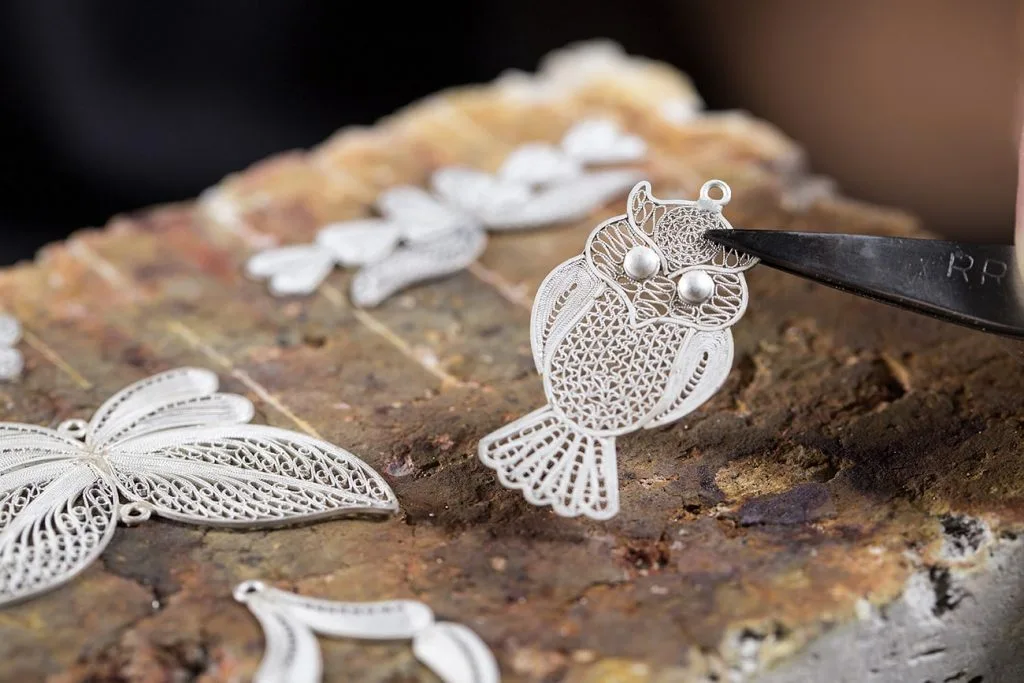
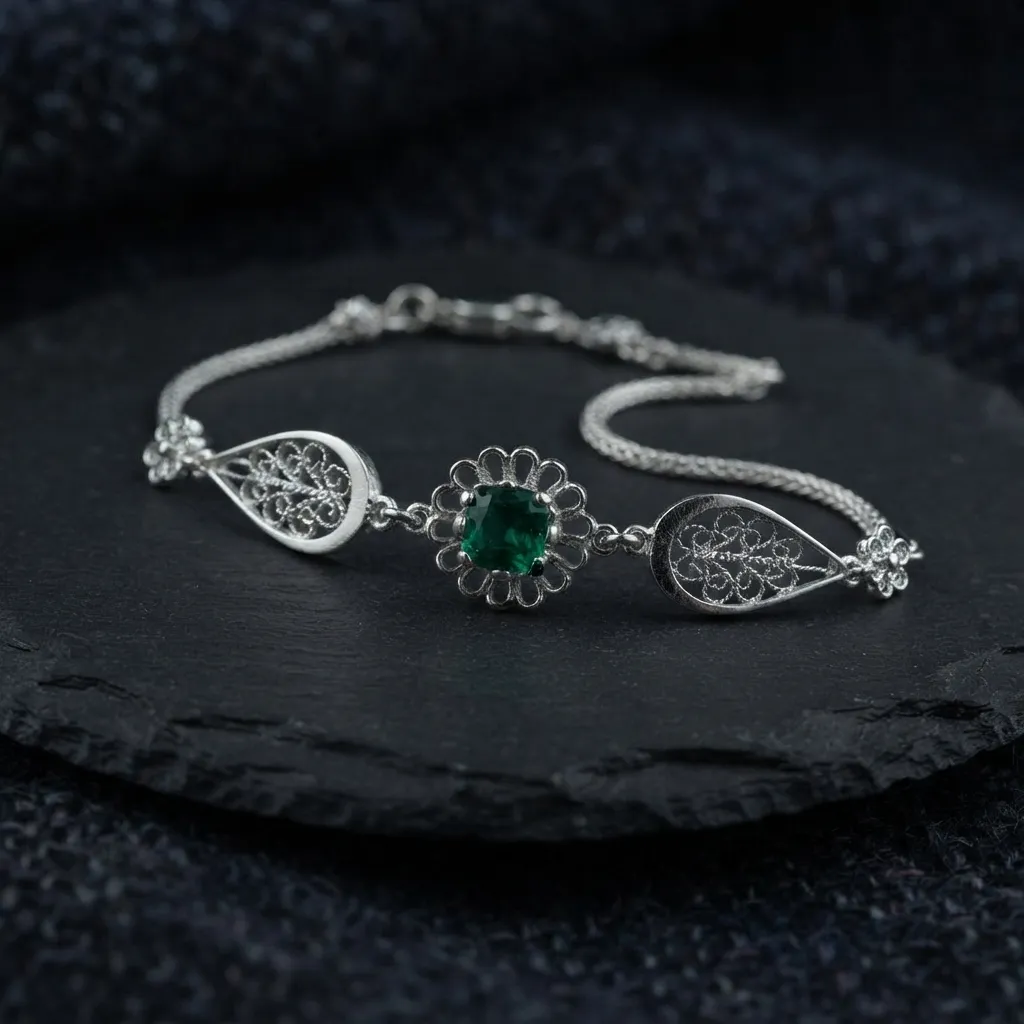
A piece of filigree isn't just silver: it's hundreds of hand-soldered joints, each thinner than a hair. Taking good care of it is not an aesthetic whim — it is continuing, at home, the same care with which it was forged.
Silver 925 and 950: what changes in care
PLIMAN trabaja con dos leyes de plata, según la colección. Andina Básica se forja en plata Ley 925. Andina Brillante e Imperial Andina se forjan en plata 950 o en oro 18K, a elección de quien encarga la pieza. Si no recuerdas cuál es la tuya, tu Dossier de Obra lo especifica.
The difference between the two is the proportion of copper in the alloy: 925 has more (7.5%), 950 has less (5%). That copper is what gives the metal its hardness — which is why 925 silver stands up a little better to the shocks of everyday use — and it's also what reacts the most with sulfur compounds in the air, sweat, and moisture, the cause behind the darkening we all call "tarnish." With less copper, 950 silver tends to hold its luster longer, but it's a softer metal, so it bends and scratches more easily.
In practice, this changes almost nothing about the care routine: both laws are cleaned, stored and protected in the same way. The only thing that changes is the frequency — if your piece is 950, it pays to be a little more careful with the hits; If it's 925, a little more consistent with maintenance cleaning.
"Taking good care of it is not an aesthetic whim — it is continuing, at home, the same care with which it was forged."
How to clean it at home
Warm water, a couple of drops of neutral fragrance-free soap, and a very soft bristle brush – a baby's one works perfectly – to reach the tiny spaces of the filigree fabric, where dust accumulates. Smooth movements, never in a straight line or with pressure: it's about loosening dirt, not rubbing it.
Rinse under running water until there is no soap left, and dry immediately with a soft, lint-free cloth. This last step is not optional: moisture trapped between the threads is, along with moist air, one of the most common causes of premature darkening.
For a maintenance shine between cleanings, a jewelry polishing cloth (impregnated, not just any fabric) gently passed in the direction of the thread is sufficient.
What not to do
-
No ultrasonic cleaners. They work well on solid pieces, but vibration can loosen, over time, the soldered joints that hold each thread of the filigree — whether it's 925 silver, 950 or 18K gold. Most expert jewelers recommend avoiding them completely on filigree pieces and always cleaning by hand.
-
No homemade abrasive pastes —Baking soda, toothpaste. They scratch the metal and get trapped in the gaps in the fabric, where they are almost impossible to remove completely.
-
No chlorine —swimming pools, hot tubs, bleach cleaning products. It reacts with the alloy and can stain it permanently.
-
No direct contact with perfume, cream or hairspray. Apply them first; the piece, at the end, when there is nothing more to spray or spread near it.
-
Do not sleep, exercise or clean the house with the room on. Sweat, accidental bumps, and household chemicals are collectively the most common cause of premature wear and tear on fine jewelry.
How to save it
A compartment of its own, lined in fabric, separated from other pieces — the metal of one jewel scratches another just by brushing it inside the same drawer. Away from direct sunlight and moisture. If you're going to store it for a long time without using it, a sachet or anti-fog cloth (or, failing that, a silica gel sachet in the same compartment) helps it arrive exactly as it came out of the workshop.
A specific warning: avoid direct and prolonged contact with rubber or rubber – elastic bands, certain inexpensive case linings – because they accelerate the darkening of the metal due to its own sulfur content.
El certificado que acompaña cada pieza PLIMAN está pensado para sobrevivir décadas — como parte del archivo de obras. Con estos cuidados, la pieza que certifica puede acompañarlo.
Frequently Asked Questions
How do I know if my piece is 925 or 950 silver?
It depends on the collection: Andina Básica is 925 Sterling silver; Andina Brillante and Imperial Andina are 950 silver or 18K gold. Your Work Dossier specifies the exact material of your piece.
Can I clean my PLIMAN piece with an ultrasonic cleaner?
We do not recommend it, no matter if it is 925 silver, 950 or gold. Watermark relies on tiny welds between wires, and the vibration of these pieces of equipment can weaken them with repeated use. Manual cleaning, even if it takes a couple more minutes, is the safe way.
How often should I clean it?
If you use it frequently, a gentle cleanse every 4 to 6 weeks is reasonable. If you store it most of the time, check the shine every couple of months — proper storage means it needs cleaning much less often.
Why did it go dark if I have hardly used it?
Silver reacts with air, not just use — both the 925 and the 950. A piece stored without anti-fog protection can darken just as much, sometimes even faster, than one that is used daily and cleaned regularly.
Does this apply the same for 18K gold pieces?
Gold is naturally more resistant to darkening than silver, but if the piece is worked in filigree – such as those of Andina Brillante and Imperial Andina – the same recommendation about avoiding ultrasonic cleaners and handling welded wires with care applies the same.